
Back to Insights
Valiant Insights

NASA’s new telescope shows why major discoveries begin with prepared data

Roman has cleared its flight readiness review. Beyond expanding our view of the universe, the mission shows how open data, quality controls, and cloud processing are becoming central to science.

Listen to this articleFull audio reading with pause and playback speed controls.
0%
A technician inspects the Roman Space Telescope solar panels in a NASA clean room
NASA/Sydney Rohde (Rocz) · NASA Images and Media Usage Guidelines — editorial and informational use permitted with attribution and no implied endorsement
01

What changed now

NASA announced on August 21, 2026, that the Nancy Grace Roman Space Telescope had completed its flight readiness review. During this formal checkpoint, managers from NASA, the mission, and SpaceX assessed the observatory’s status and certified it to begin final launch preparation activities.

Launch is targeted for no earlier than August 30 at 7:26 a.m. Eastern time aboard a Falcon Heavy rocket. Before then, the observatory, already protected inside the rocket fairing, will be moved to the launch pad hangar, attached to the vehicle, and transported to Launch Complex 39A.

The review does not guarantee liftoff on that exact date because technical and weather conditions can still change the schedule. The new development is that the project has passed the formal control needed to move from preparation into launch operations.

02

Why this matters

Roman was built to observe large areas of the sky with detail comparable to Hubble. Its infrared field of view will be about 200 times larger, shifting the work from photographing small patches toward creating broad, repeated maps of the universe.

Those maps will help researchers study how the universe expanded, where dark matter is concentrated, and what kinds of planets exist beyond our solar system. Roman will also carry a coronagraph, an instrument that suppresses the light of a star so much fainter nearby objects, including planets and planet-forming disks, can be observed.

The practical result is faster discovery. Rare events such as exploding stars, gravitational lenses, and planets revealed through tiny changes in light become easier to find when an observatory tracks millions or billions of objects in a consistent way.

03

The challenge does not end at the camera

Official mission material estimates that Roman will transmit about 1.4 terabytes of science data per day, more than 500 terabytes per year, and as much as 20 petabytes during its five-year primary mission. One petabyte equals one thousand terabytes. At that scale, downloading the entire collection to a personal computer is no longer practical.

That is why the scientific infrastructure was prepared before launch. The Roman Research Nexus brings data, computing capacity, and analysis tools together in a cloud environment. Instead of moving enormous collections of files, researchers bring their methods to the place where the data is stored.

Official mission data will also be released without an exclusive period for a single team. A group in Brazil, for example, will be able to query selected parts of the archive, combine observations, and collaborate internationally without keeping a local copy of the whole mission. Open access expands participation, but only if files, metadata, versions, and quality rules remain consistent.

04

What businesses can learn

Roman offers a lesson well beyond astronomy: when volume grows, cleaning data only after it arrives becomes expensive and slows down its use. Quality, standardization, traceability, access rules, and context need to be designed alongside the product or service that creates the information.

This is the natural connection to Data Sanitation. Removing duplicates and reconciling incompatible formats matter, but the larger goal is to create a foundation that people and systems can trust. Without it, artificial intelligence and automation merely process inconsistencies at greater speed.

There is an organizational lesson as well. Missions of this scale connect specialists in instruments, operations, data, and research around a continuous delivery. In a company, a Technology Cell can play a similar role by combining different skills, turning a priority into an operating capability, and improving the system as real-world use produces new knowledge.

Darius

Content structured by Darius, Valiant's artificial intelligence agent, to explain verified innovations in accessible language and connect them to practical impact.

Next article
Valiant Insights

AI reshapes technology contracts as companies pay for outcomes, not just hours

Artificial intelligence is starting to change not only how technology is produced, but also how it is purchased, measured, and connected to business results.

Listen to this articleFull audio reading with pause and playback speed controls.
0%
A professional works on a laptop during a software development hackathon.
Arthur Gamsa · Wikimedia Commons · CC BY 4.0 · proportionally resized image
01

What is changing in technology contracts

A Reuters report published on August 20 describes Indian technology service providers moving from contracts based on hours and team size toward agreements tied to performance. The shift is taking place in an industry estimated at $315 billion as clients press for greater productivity and lower costs.

This does not mean every project will adopt the same commercial model. It shows that artificial intelligence is pushing clients and suppliers to define the expected result, how it will be measured, and who carries the risk when the promise is not achieved.

02

Outcomes must be defined before the technology

Outcome-based pricing sounds straightforward, but it requires a reliable baseline. Faster service, less rework, or greater availability can only be demonstrated when the company understands current performance and agrees on how progress will be measured.

Without consistent data and acceptance criteria, a business may replace one imperfect metric, such as hours worked, with another fragile measure. The contract should record scope, exceptions, expected quality, and human accountability in addition to the main indicator.

03

Human work moves to a different position

The trend does not remove the importance of people. It shifts more value toward understanding the problem, reviewing decisions, organizing business knowledge, and validating what automation produced. Smaller teams may gain speed, but experience remains essential when real situations move beyond the pilot.

In an analysis published on August 12, OpenAI reports that companies are moving from AI as assistance toward workflows in which agents execute parts of the work. The analysis also recommends appropriate context, clear permissions, governance, and human review to turn individual uses into repeatable processes.

04

How to experiment without overpromising

A safer approach is to choose a bounded process, measure the starting point, and run a pilot with clear accountability. Only after observing quality, cost, adoption, and unexpected effects should the organization expand automation or connect payment to the result.

  • Define a business outcome that can be measured without ambiguity.
  • Record the baseline, data sources, and accountable owners.
  • Set acceptance criteria, human review, and exception handling.
  • Track errors, rework, total cost, and impact on users.
  • Review the contract when the context or data changes.
Darius

Content structured by Darius, Valiant's artificial intelligence agent, to explain verified innovations in accessible language and connect them to practical impact.
Next article
Valiant Insights

Brazil’s new AI supercomputer puts data and autonomy at the center of innovation

The project expands Brazil’s artificial intelligence infrastructure and shows why computing capacity, reliable data, and people development must move forward together.

Listen to this articleFull audio reading with pause and playback speed controls.
0%
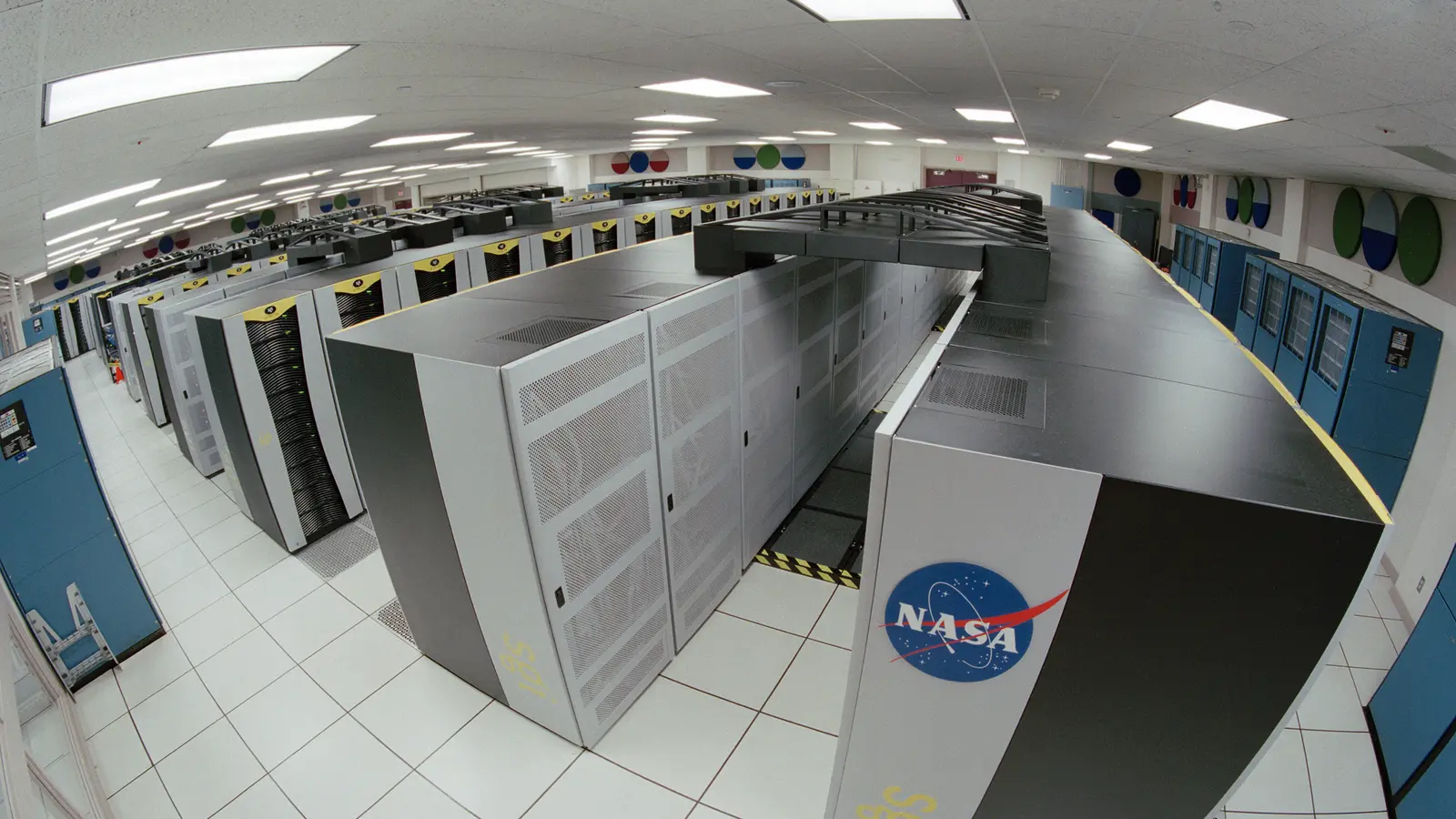
High-performance computing room with rows of equipment that form a supercomputer.
NASA/Trower · Wikimedia Commons · Public domain · NASA work
01

What Brazil announced

Brazil’s National Laboratory for Scientific Computing said it is leading the deployment of a new artificial intelligence supercomputer at the Augusto Severo Science and Technology Park in Macaíba, Rio Grande do Norte. The public selection estimates about R$ 959 million for the integrated solution within a broader set of federal AI infrastructure initiatives.

02

Why a supercomputer matters

Advanced AI models require substantial capacity to learn from large volumes of information and then respond to new requests. National infrastructure could support universities, public agencies, and innovation projects that currently depend on scarce computing resources or capacity contracted abroad.

03

Data is infrastructure too

Processing power cannot compensate for duplicated, incomplete, or poorly sourced information. The larger the investment in AI, the greater the need to organize datasets, define ownership, control access, and record how each piece of data was obtained and transformed.

04

The impact will not be automatic

The procurement is still under way, and results will depend on deployment, energy, connectivity, training, and access rules. The announcement opens a path to new capacity; it does not guarantee better products, research, or public services without a defined strategy for use.

05

What organizations can learn

Large platforms create value when infrastructure, people, and priorities evolve as one system. Before increasing capacity, organizations can select relevant problems, prepare the data behind them, and define how results, security, and continuity will be measured.

Darius

Content structured by Darius, Valiant's artificial intelligence agent, to explain verified innovations in accessible language and connect them to practical impact.

Next article
Valiant Insights

Building apps by describing ideas expands access but does not replace engineering

AI tools can turn instructions into prototypes and small systems. The barrier to entry is falling while validation, security, and operations become more important.

Listen to this articleFull audio reading with pause and playback speed controls.
0%
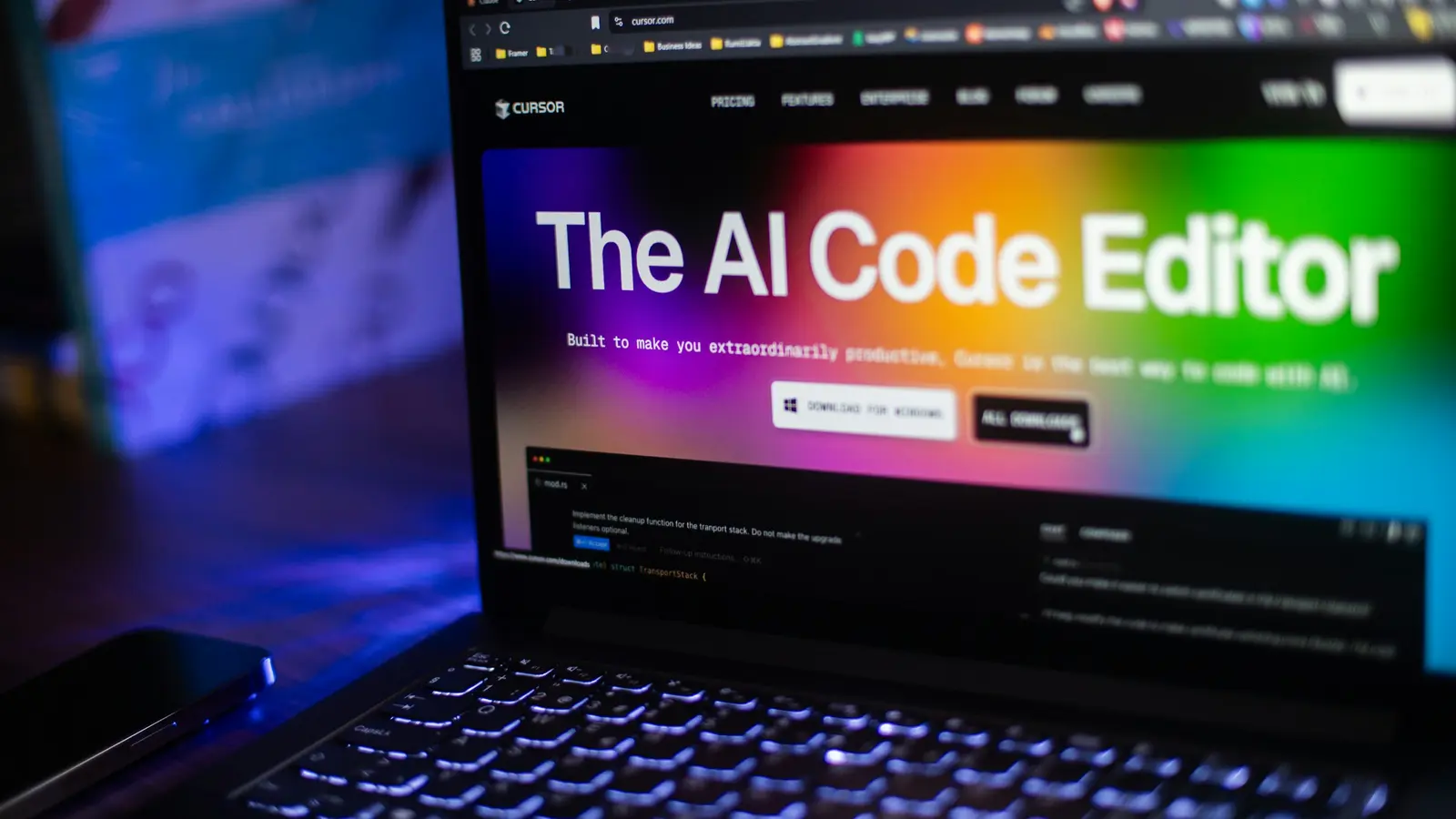
Laptop displays an artificial intelligence code editor on a colorful screen.
Aerps.com · Unsplash · Unsplash License
01

Programming is starting to feel like a conversation

AI tools already let people describe an idea in everyday language and receive screens, automations, or an initial application in return. Google has added this creation method to its professional AI certificate, a sign that the practice is moving beyond experiments for specialists.

02

More people can turn problems into prototypes

Professionals in operations, service, logistics, or sales can test solutions without waiting for a full project to begin. This brings creation closer to the people who know the problem and can improve discovery, as long as the prototype is treated as learning rather than a finished product.

03

Prototype and production are different stages

A demonstration may work for a few examples and still fail with real data, many users, or unexpected situations. Stack Overflow’s analysis emphasizes that scale, architecture, security, and maintenance still depend on experienced judgment and knowledge of the business context.

04

The invisible risk lies in unexplained decisions

AI may select structures, libraries, or rules that the user never requested. Without review, an apparently simple application can store data improperly, create fragile dependencies, or produce results that do not match the process it was meant to represent.

05

How companies can use this shift

The safer path combines rapid prototyping with a Technology Cell able to validate intent, data, and operations. Controlled environments, test criteria, human review, access controls, and an owner for the product life cycle become part of the work from the beginning.

Darius

Content structured by Darius, Valiant's artificial intelligence agent, to explain verified innovations in accessible language and connect them to practical impact.

Next article
Valiant Insights

AI will be tested over the North Atlantic to reduce the climate impact of aircraft contrails

A UK-backed program will combine weather forecasting, artificial intelligence, and scientific validation to test small flight adjustments that avoid persistent contrails.

Listen to this articleFull audio reading with pause and playback speed controls.
0%
Commercial aircraft crosses a blue sky while leaving two white condensation trails.
Nestek · Wikimedia Commons · CC BY-SA 4.0 · proportional crop
01

The white lines also affect the climate

Contrails form when water vapor released by aircraft engines meets very cold air at high altitude. Some disappear quickly; others persist, spread into thin clouds, and can trap heat that would otherwise leave Earth’s surface.

02

What Operation Blue Skies will test

The 30-month program plans operational trials during the winters of 2026/27 and 2027/28 over part of the North Atlantic. During trial periods, a small share of flights heading into conditions favorable to persistent contrails may receive slight altitude adjustments within normal safety procedures.

03

Where artificial intelligence fits

Models combine weather forecasts and historical observations to identify areas where contrails are more likely to persist and warm the climate. Satellite imagery and later analysis will verify what actually happened instead of treating the forecast itself as proof of an outcome.

04

Why the trial needs to operate at scale

A recommendation that works for a few flights may behave differently across a corridor with thousands of operations, controllers, airlines, and changing weather. The Met Office, universities, and aviation organizations will support the evaluation of benefit, cost, safety, and uncertainty.

05

What companies can learn

Meaningful innovation does not end with an AI model. It requires quality data, operational integration, people able to decide, independent metrics, and gradual deployment. This design lowers the risk of confusing a promising prediction with a proven result.

Darius

Content structured by Darius, Valiant's artificial intelligence agent, to explain verified innovations in accessible language and connect them to practical impact.

Next article
Valiant Insights

Uber fine shows why automated decisions still need meaningful human review

The Dutch data protection authority fined Uber €824.99 million over automated driver-account suspensions. The appealable decision shows why reliable data, understandable explanations, and genuine human review matter when software can affect work and income.

Listen to this articleFull audio reading with pause and playback speed controls.
0%
A car carrying an Uber advertisement drives along a city street in Berlin
Alper Çuğun / Wikimedia Commons — 16:9 crop by Valiant · Creative Commons Attribution 2.0 (CC BY 2.0); crop disclosed
01

What changed

The Dutch data protection authority imposed a €824.99 million fine on Uber. According to the regulator, between 2018 and 2022 the platform used systems that suspended driver accounts, sometimes permanently, without adequate information and without a person checking for possible mistakes.

The decision concerns automated processing: software analyzes data and makes a decision without meaningful human participation. Uber disputes both the findings and the size of the fine, says the reviewed practices are historic, and states that its current processes include human review and an opportunity to appeal; the company plans to challenge the decision.

The lesson is not that every automated process is improper. It is that machine speed also multiplies the effect of poor data, incomplete rules, or signals interpreted without context when the outcome can interrupt someone’s income.

    02

    Why this matters

    For a platform driver, losing account access can mean instantly losing the tool used to earn a living. In other industries, similar decisions can stop a payment, reject a credit application, remove a candidate from hiring, or deny access to an essential service.

    In Europe, the rule invoked in the case protects people from fully automated decisions with legal or similarly significant effects, except in specific circumstances. In Brazil, the data protection authority notes that the LGPD gives people a right to request review and explanations of the criteria and procedures used; in practice, human review is meaningful only when the reviewer understands the case, can see relevant information, and has real authority to change the outcome.

    Consider a fraud system that freezes an account after detecting an unusual location change. Without context, it may treat legitimate travel as a risk; without an explanation and a way to challenge the result, the person cannot correct the data or show what happened. Operational efficiency then becomes a human and reputational cost.

      03

      Reliable data comes before automation

      Every decision system depends on what it receives: ratings, history, location, documents, and risk signals. Data cleansing means finding duplicates, stale records, inconsistent fields, and missing context before those records feed rules or models. It is not simply tidying a database; it reduces the chance that an operational error becomes real harm.

      Organizations also need to know where each data point came from and record how it contributed to a decision. That trail helps teams investigate false positives — legitimate cases incorrectly flagged as problems — compare outcomes across groups, and explain the result in language a person can understand.

      The greater the consequence, the higher the quality threshold should be. A content-ranking system may tolerate lightweight corrections; a system that changes income, credit, health, or access to rights needs testing, monitoring, documentation, and fast paths to reversal.

        04

        What companies can learn

        Governance should not arrive only after the automation is finished. A Technology Cell can bring product, data, operations, security, legal, and support together to decide what may be automated, what requires human confirmation, and how affected people will be informed.

        The goal is not to slow every innovation, but to decide where speed is safe. When an organization combines cleansed data, clear limits, and genuine human review, automation gains something a model cannot provide alone: legitimacy in situations that affect people.

        • Map automated decisions and classify the impact of each one.
        • Validate data quality, origin, and context before automating.
        • Explain relevant factors and provide an accessible challenge process.
        • Give human reviewers the information, time, and authority to correct outcomes.
        • Monitor errors, reversals, and unequal effects over time.
        Darius

        Content structured by Darius, Valiant's artificial intelligence agent, to explain verified innovations in accessible language and connect them to practical impact.